
Why Do Traders Break Rules Under Pressure?
Why do traders break rules? Learn how stress, weak systems, and missing feedback drive mistakes, and build a process that protects trading capital daily.
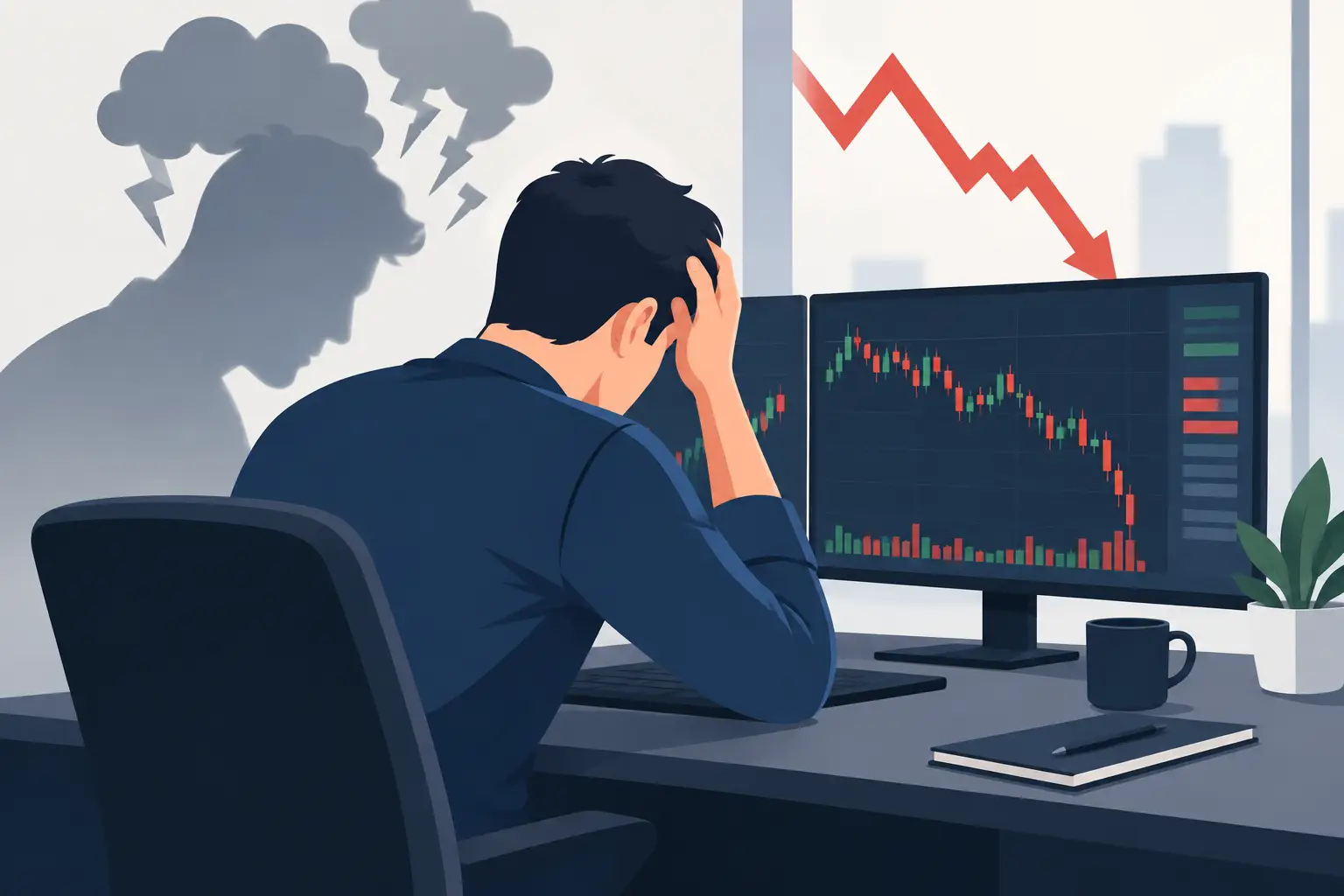
A trader can define a maximum loss, size a position correctly, and still move a stop within seconds of entering a trade. That gap between knowing and doing is the real question behind why do traders break rules. The issue is rarely a lack of market knowledge. It is usually a failure of control when uncertainty, speed, and money are all present at once.
Rules only work when they remain operational under pressure. A trading plan stored in a document is not enough. The plan must be connected to position sizing, execution records, review, and a clear consequence when discipline breaks. Without that structure, even a capable trader can turn one poor decision into a damaging sequence.
Why Do Traders Break Rules?
Traders break rules because markets trigger emotions faster than most decision processes can contain them. A position moves against the trader, an opportunity appears to be slipping away, or a recent loss creates urgency. The brain shifts from following a defined process to removing immediate discomfort.
Moving a stop may feel like protecting a trade from normal volatility. Adding to a losing position may feel like improving the average entry. Taking an unplanned trade may feel like acting decisively. In each case, the trader often gives the decision a rational explanation after the fact. But the original rule was designed when the trader had distance, data, and a clearer view of risk.
This is why rule-breaking cannot be solved by motivation alone. Discipline is not a personality trait that appears when needed. It is an operating capability built through defined limits, visible data, repeatable workflows, and honest review.
The Main Forces Behind Rule-Breaking
Emotional pressure changes the objective
A disciplined trader enters a position with an objective: execute a setup, manage risk, and let the outcome provide data. Under stress, the objective can quietly change. The new objective becomes avoiding a loss, recovering a prior loss, proving a market view correct, or catching a move that already feels missed.
That shift is dangerous because it changes what success means. A trader who is trying to avoid being wrong is no longer managing a trade objectively. A trader trying to recover quickly is likely to increase frequency, size, or both. The market has not changed, but the decision standard has.
Loss aversion is especially powerful because a realized loss feels final. An open loss can feel temporary, even when the original invalidation level has already been reached. This is why traders often respect profit targets more easily than stop-losses. Taking profit provides relief. Taking a loss demands acceptance.
Rules are vague or disconnected from execution
Many trading rules sound disciplined but cannot guide a real-time decision. “Do not overtrade” is not a measurable rule. “Use proper risk” leaves too much room for interpretation. “Only trade quality setups” has no value unless quality is defined before the session begins.
A usable rule answers specific questions: What is the maximum risk per trade? What invalidates the setup? How many entries are allowed? What is the daily loss limit? Which conditions permit an additional trade after a loss? What must happen before position size increases?
Rules also fail when they sit apart from the tools used to trade. If risk limits are in a spreadsheet, setups are in a separate note, executions are at the broker, and reviews happen inconsistently, the trader is relying on memory at the moment memory is least reliable. Fragmented information creates room for exceptions.
Recent outcomes distort judgment
A winning streak can make a trader feel that the process is more flexible than it really is. After several gains, the trader may take lower-quality setups, increase size prematurely, or treat risk limits as optional. The problem is not confidence. It is confidence detached from verified expectancy.
A losing streak creates the opposite distortion. The trader may hesitate on valid setups, cut winners too early, force trades to recover, or abandon a strategy before enough data exists to evaluate it. Both reactions come from giving recent P&L more authority than the trading plan.
Professional development requires separating process quality from short-term outcomes. A properly executed loss can be a good trade. A profitable rule violation can be a bad trade because it reinforces behavior that will eventually damage capital.
There is no immediate feedback loop
Rule-breaking survives when its cost is hidden. If a trader doubles size, moves a stop, and the trade recovers, the immediate result appears favorable. Without review, the trader records the profit but misses the risk exposure, the plan violation, and the probability that the same behavior ends differently next time.
This is where a trading journal becomes more than a record of entries and exits. It should expose the difference between planned risk and actual risk, planned setup and actual execution, and expected behavior and real behavior. If discipline cannot be measured, it will be judged by mood and memory.
Build Rules That Hold Up in Real Conditions
The goal is not to create more rules. It is to create fewer rules that are precise enough to be executed and reviewed.
Start with risk because risk is the control point that protects every other part of the process. Define a fixed maximum loss per trade, a daily loss limit, and a position-sizing method tied to the distance between entry and invalidation. If an instrument, setup, or market condition requires a wider stop, the position size should adjust. The dollar risk should not expand simply because the trade feels compelling.
Next, define setup criteria before the session. This can include market context, time of day, catalyst, entry trigger, invalidation level, and target logic. A setup does not need to be complicated, but it must be recognizable. If it cannot be described clearly before entry, it will be difficult to assess after exit.
Then establish rules for behavioral risk. For example, decide in advance what happens after two consecutive losses, after a daily loss limit is reached, or after an unplanned execution. The correct response may be a mandatory pause, reduced size, or an end to the session. These are not punishments. They are circuit breakers designed to keep temporary emotional pressure from becoming a capital event.
Connect Planning, Execution, and Review
The strongest discipline systems reduce reliance on willpower. A trader should be able to see the plan before entry, record the reason for the trade during or immediately after execution, and review the result with the original plan visible.
That connected workflow turns vague intentions into evidence. Did the trade match the documented setup? Was the stop honored? Did actual size match planned size? Did the trader enter during an approved time window? Was the exit based on the plan or on discomfort?
Cobra Trading System is built around this type of connected operating workflow: define risk, document activity, analyze performance, and refine decisions from complete records. The value is not simply having more data. It is making the relevant data available when it can change behavior.
Review should focus on patterns, not isolated mistakes. One moved stop may be an error. Five moved stops over two weeks is a behavior pattern. One oversized position may be accidental. Oversizing after losses is a clear process failure that requires a specific control.
Treat Violations as Data, Not Identity
Traders often make rule-breaking worse by turning it into a personal judgment. They label themselves undisciplined, then trade the next session carrying frustration and shame. That response is not useful. A violation is operational data.
Identify the exact point where the process failed. Was the rule unclear? Was the position too large for the trader to tolerate normal movement? Was there no predefined response after a loss? Was the setup entered without enough confirmation? Did fatigue, distraction, or financial pressure affect the decision?
The answer determines the correction. A vague rule needs a measurable threshold. A sizing problem needs a revised risk model. A recurring revenge-trading pattern needs a hard session stop and a review requirement before the next trade. Better decisions improve results when they are built into the system, not left to intention.
The market will continue to create pressure, uncertainty, and temptation. A serious trader does not wait to become emotionless. They build a process that keeps emotion from controlling risk. When every trade is planned, recorded, measured, and reviewed, following rules becomes less about resisting impulse and more about running the operation correctly.